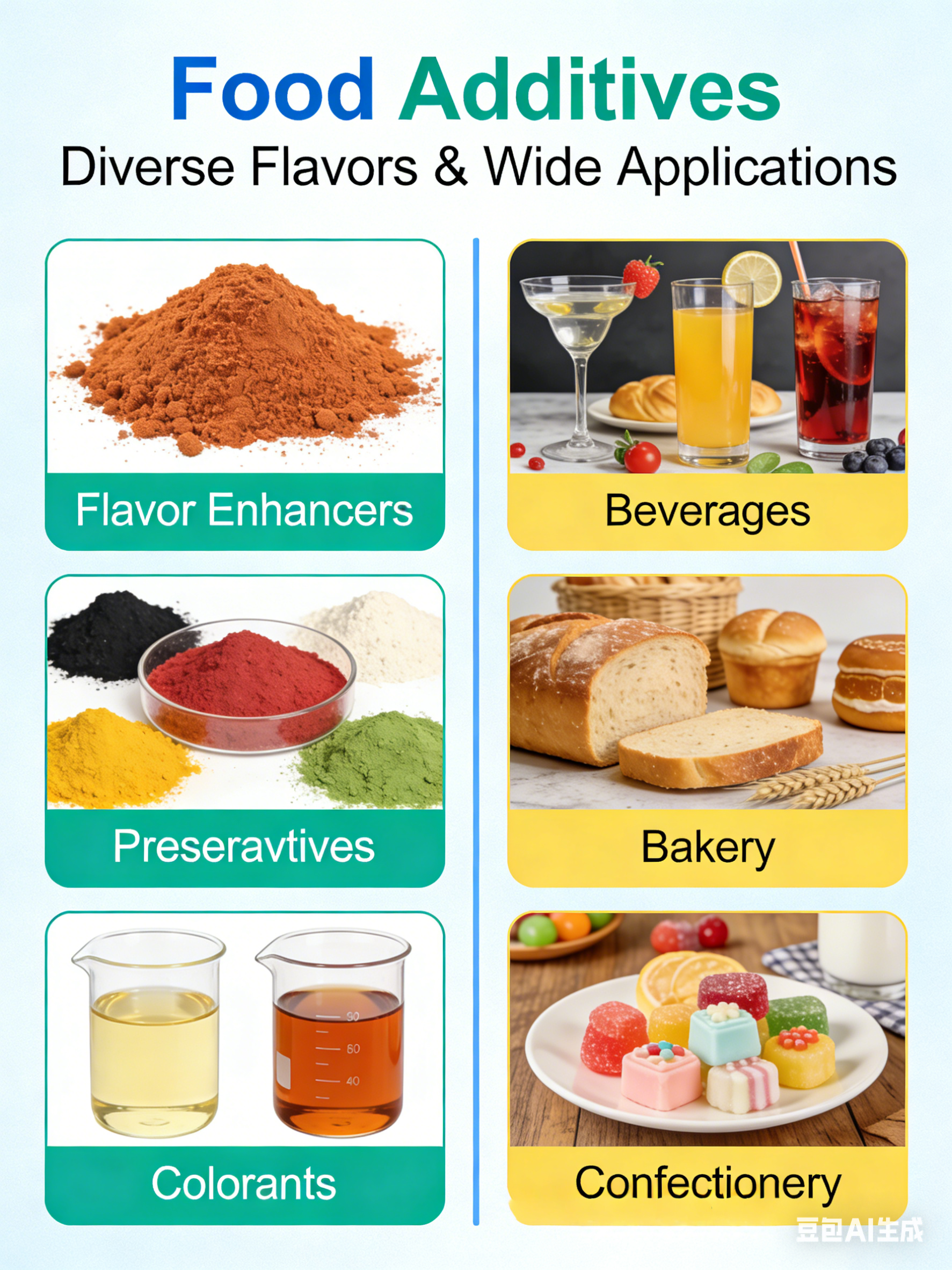
Food additives are natural or synthetic substances added to food during production, processing, packaging, or storage to enhance safety, taste, appearance, or texture. They serve key roles like preserving freshness, coloring, and thickening, and are essential for maintaining quality throughout the supply chain, such as with preservatives like nitrates or nitrites on EFSA.
Common Purposes and Examples:
Preservatives: Prevent spoilage from mold, bacteria, and yeast (e.g., sodium benzoate, sulfites).
Sweeteners: Add sweetness without high calories (e.g., aspartame, sorbitol).
Colorants: Restore color lost during processing or enhance visual appeal (e.g., tartrazine, caramel color).
Flavor Enhancers: Improve flavor without contributing their own distinct taste (e.g., MSG).
Emulsifiers, Stabilizers, & Thickeners: Maintain consistent texture and prevent separation (e.g., lecithin, xanthan gum).
Nutritional Enhancers: Replace vitamins lost in processing or improve nutritional value (e.g., added iodine or vitamins).
Types of Additives:
Direct Additives: Substances intentionally added to food for a specific purpose, such as adding aspartame to yogurt.
Indirect Additives: Substances that become part of the food in trace amounts during processing or packaging, such as materials migrating from plastic packaging.
Common Misconceptions:
Processed foods do not always contain additives; many foods like frozen products can remain fresh without them.
Many natural products, such as apples, contain substances used as additives, such as citric acid.